


1. What the office accepts: submission checklist
A Polish clerk checks three things: the translator is listed in the MS register for the correct language pair, the seal and signature appear on every page, and names and dates match the original document and the application. What the service is called on your receipt or in correspondence with a translation office doesn't matter to the office.
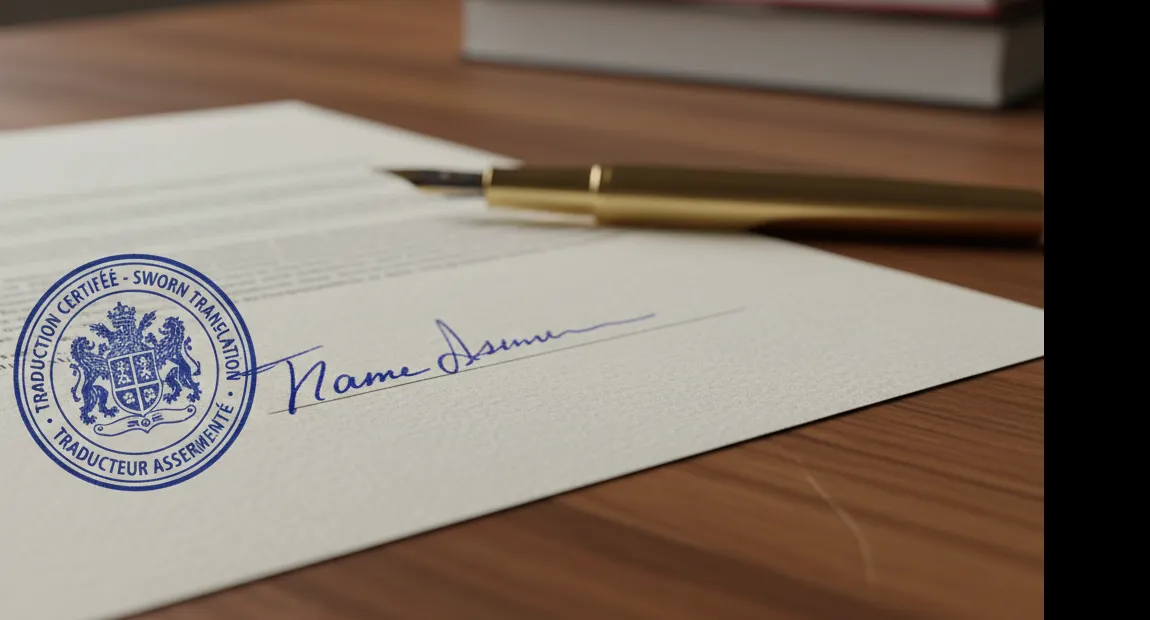
- A sworn translator's seal shows their register number and the language pairs they're accredited for. Without this stamp, the document is treated as an ordinary translation — it will be returned the same day or sent back for correction.
- A translation marked «from a copy» is accepted only when the instructions explicitly allow a copy. For a residence card, marriage registration, inheritance cases, and many ZUS procedures, the translator must see the original or a certified copy — otherwise the package is returned.
- A translation with notarial certification from a CIS country is not verified by a Polish office: the translator isn't listed in the Polish register, and their authority can't be confirmed. A new sworn translation done in Poland is required, regardless of how many times the document was certified abroad.
- Bring the original and the translation together when submitting: the clerk compares the seal on the last page of the translation with the details in the application. A single misspelled letter in a surname is grounds to return the whole set. If the translation is old, check whether it's still valid — after a change of passport details, offices sometimes require a fresh translation.
- A certified translation with a bureau seal and an English-language certification statement is the format for the UK's UKVI and the US's USCIS, not for a Polish voivodeship office. A consulate and a voivodeship office require different documents — mixing formats is a common reason for refusal.
Important!
2. Notarial certification vs sworn translation: two different procedures
In everyday speech, «notarial translation» often refers to any official translation. Under Polish law these are two separate mechanisms, and one cannot substitute for the other.
Присяжный
Нотариальное заверение
СНГ «нотариальный»
Certified UK/US
- In short: sworn translation certifies the text, done by an accredited translator. Notarial certification certifies a signature, not the content. Confusing the two is the main reason clients overspend by ordering both services «just in case».
3. When to order what: scenarios
Choose the format based on where you're submitting the document, not on what a translation office or an ad calls the service.
- Residence card (karta pobytu), PESEL number, address registration, marriage at the civil registry office (USC), vehicle registration — sworn translation into Polish. Don't order notarial signature certification without a written request from the office.
- Court, prosecutor's office, notary for a real-estate transaction — sworn translation. Courts will not accept a Ukrainian or Belarusian «notarial» translation even with an apostille on the original.
- Starting a company, registering with the National Court Register (KRS), filing with the tax office — sworn translation of founding documents and resolutions. An ordinary translation won't be accepted by an accountant or the tax office.
- Employment, ZUS, diploma nostrification — sworn translation of the diploma, transcript, and certificates. An ordinary translation from a bureau without a sworn seal will be returned by an employment office or university.
- UK visa (UKVI), US immigration (USCIS) — certified translation in English with a bureau seal. A sworn translation with a Polish seal will not be accepted as a substitute for this format.
- Translation «for yourself» — a lease agreement, correspondence with a landlord — an ordinary translation without a sworn seal is enough if the document isn't being submitted anywhere.
- If you already have a translation with notarial certification from Ukraine or Belarus, order a new sworn translation for a Polish office. Keep the old document for reference, but don't include it in the package.
4. Common questions before ordering
Below are answers to the doubts clients most often bring to LEGIX before their first document submission. If your case is unusual, send a scan of the document and a description of the procedure — we'll suggest a format before you pay.
- «The list says notarial translation» — in Poland this almost always means sworn translation. If unsure, ask the office to confirm they mean «tłumaczenie przysięgłe».
- «Can I save money and bring a translation I made myself?» — only if the office explicitly accepts the document in its original language. For foreign certificates, diplomas, and records, translation is mandatory.
- «Does the translation need an apostille?» — an apostille goes on the original document, not on the translation. The translation is certified separately by a sworn translator.
- «How long does a translation take?» — a one-page certificate or passport is usually ready within 24–48 hours after confirming the details. A lengthy diploma with a transcript takes longer; we quote the timeline before starting work.
- A full guide with a format comparison table, common mistakes, and a step-by-step ordering process is in the article «Notarial document translation» on the LEGIX blog.
- Still unsure which format you need? Message LEGIX — based on a scan and the name of your procedure, we'll tell you whether you need sworn, certified, or an ordinary translation.