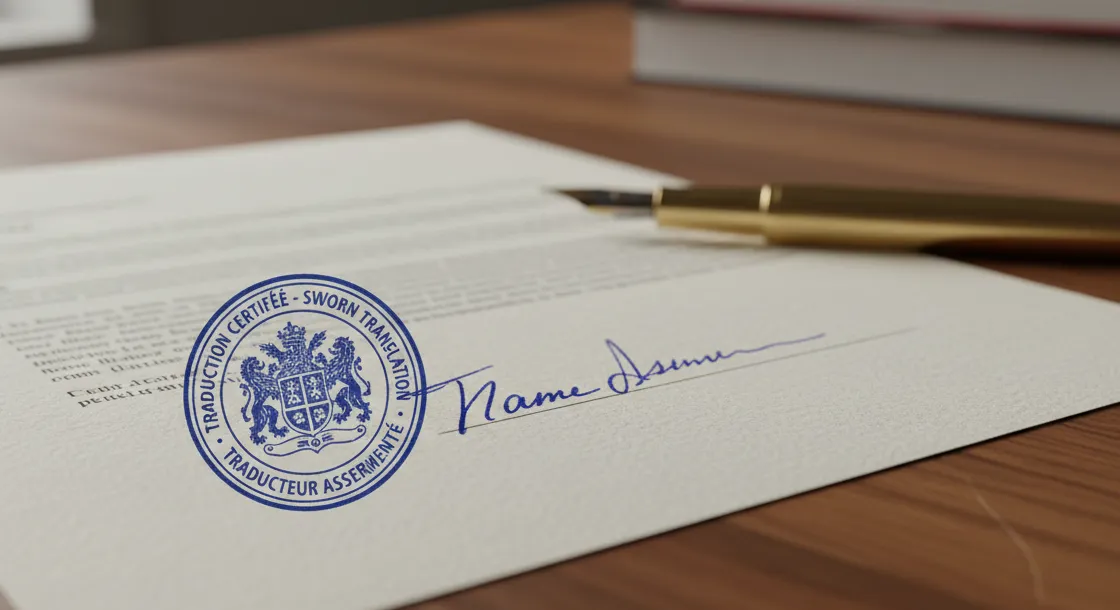
What is a sworn translation and when is it needed?

Have you moved to Poland or are you planning to do so? You will certainly need to translate documents. But not a regular translation, but a sworn translation. What is it and why is it so important?
In this article, we will tell you everything you need to know about sworn translation: how it differs from regular translation, when it is required, which documents need to be translated, and how to choose a reliable translator. This information will help you avoid mistakes and save time when processing documents in Poland.
What we'll tell you in this article
What is a sworn translation?

A sworn translation is an official translation of documents performed by a translator who has special permission from the Ministry of Justice of Poland. Such a translator is called a sworn translator (tłumacz przysięgły).
The main difference between a sworn translation and a regular one is legal force. A sworn translation has official status and is accepted by all state bodies of Poland: courts, administrative institutions, civil registry offices, voivodeship offices, universities, and other official organizations.
Each sworn translation is certified with the official seal of the translator and their signature. This guarantees that the translation corresponds to the original and has legal force. Without such a seal, the document will not be accepted by official bodies.
How does a sworn translation differ from a regular one?
Many people do not understand the difference between a sworn and a regular translation. Let's figure it out:
A regular translation can be performed by anyone who knows languages. It is suitable for personal use, reading documents, understanding content. But such a translation does not have legal force and will not be accepted by official bodies.
A sworn translation is performed only by a specially authorized translator who has undergone appropriate training, passed exams, and received permission from the Ministry of Justice. Such a translation has official status and legal force.
Not sure if you need a sworn translation? We'll help you figure it out and calculate the cost.
Simply put: if you just need to understand what is written in a document — a regular translation will do. If the document needs to be submitted to official bodies — a sworn translation is required.
When is a sworn translation required?
A sworn translation is required in many situations when you interact with official bodies of Poland:
For court cases
If you are participating in a court process in Poland, all documents in a foreign language must be translated by a sworn translator. These can be contracts, witness statements, medical certificates, financial documents, and other case materials.
For administrative procedures
When applying to various administrative bodies — voivodeship offices, city offices, tax services — all foreign documents require a sworn translation.
For civil registry office
If you want to register a marriage, obtain a birth certificate for a child, or process other civil status acts, documents from other countries must be translated by a sworn translator.
For education
When entering a Polish university or when nostrifying a diploma, all educational documents (diplomas, certificates, academic transcripts) require a sworn translation.
For work
Many employers require a sworn translation of a diploma, work book, or other documents to confirm qualifications and work experience.
For document replacement
When replacing a driver's license, obtaining a Polish passport, or other official documents, a sworn translation is also required.
Which documents need to be translated?

Most often, a sworn translation is required for the following documents:
Personal documents: passports, birth certificates, marriage certificates, death certificates, divorce certificates, driver's licenses.
Educational documents: diplomas, certificates, academic transcripts, course completion certificates.
Medical documents: medical certificates, medical histories, test results, prescriptions.
Legal documents: contracts, agreements, court decisions, powers of attorney, company statutes.
Need document translation? Our specialists will help you with any types of documents.
Financial documents: bank statements, income certificates, tax documents.
It is important to remember: if a document will be used in official bodies of Poland, it must be translated by a sworn translator. A regular translation will not work.
How to choose a sworn translator?
Choosing a sworn translator is an important step on which the success of your affairs depends. Here's what to pay attention to:
At LEGIX we perform sworn translation online: send scans, receive the sealed document by courier — no office visit needed. Read more in our article on sworn translation online in Poland (/blog/priisyazhnyj-perevod-onlain-polsha).
Official permission
Make sure the translator actually has permission from the Ministry of Justice of Poland. This can be checked on the official website of the ministry. Without such permission, the translation will not have legal force.
Work experience
An experienced translator better understands the requirements of various bodies and can properly prepare documents. They know what formulations to use, how to properly certify translations.
Language knowledge
A sworn translator must have permission to translate from specific languages. Make sure your translator has permission to translate from the language you need to Polish.
Execution deadlines
Find out how long the translation will take. Usually, standard documents are translated within 24-48 hours, but for urgent cases, an express translation may be required.
Cost
The cost of a sworn translation depends on the type of document, volume of text, and urgency. It is important to get transparent information about the cost before starting work.
Want to know the exact cost of translating your documents? Calculate the cost right now.
What to do if the translation is incorrect?
If you find an error in a sworn translation, you should immediately contact the translator. They are obliged to correct the error free of charge, as they are responsible for the quality of the translation.
If the translator refuses to correct the error, you can file a complaint with the Ministry of Justice. Sworn translators are under the control of the ministry and must comply with professional standards.
If you need sworn translation of documents, you can find out the cost of translation by clicking the button below
Frequently Asked Questions
Can a sworn translation be done without Polish?
No. In Poland, sworn translations are always performed with the participation of the Polish language. If you need a translation, for example, from Ukrainian to English, you must perform two sworn translations: first Ukrainian → Polish, then Polish → English.
How much does a sworn translation cost?
The cost depends on the type of document, volume of text, and urgency. Standard documents (certificates, passports) usually cost less than complex documents (contracts, technical documents). For an accurate cost, it is better to contact a translator with a specific document.
How long does a sworn translation take?
Standard documents are usually translated within 24-48 hours. For urgent cases, an express translation within a few hours is possible, but the cost will be higher.
Do I need to bring the original document?
Usually, a good quality photo or scan of the document is sufficient. The translator can work with digital copies, which speeds up the process and makes it more convenient for the client.
Is a sworn translation valid in other countries?
A sworn translation performed in Poland is valid only in Poland. To use documents in other countries, additional legalization or an apostille may be required.