
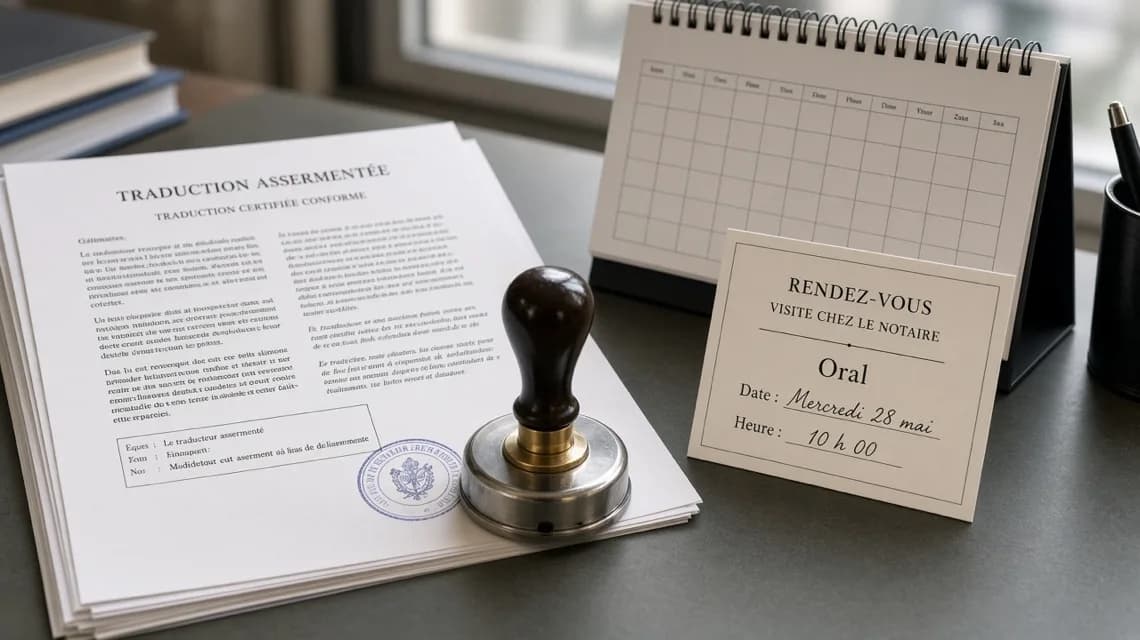
A sworn translator in Poland is not “someone with a seal for everything”. They have a regulated set of acts: written certified translation, oral interpreting in official settings, review and certification of someone else’s text, repertory records, and delivery on paper or with a qualified electronic signature. Every act is tied to a language listed by the Ministry of Justice.
The article on what a sworn translator is explains status. This piece maps the services people actually order, how written work differs from oral, what falls outside the mandate, and how to match the format to the recipient.
Below is a practical service map without invented prices: see the price list for ranges, the sworn-translation page for written orders, and the sworn-translator page to match a specialist.
Sworn-translator services are written certified translation, official interpreting, and related acts (text review, repertory, paper or QES) strictly in a MoJ-listed language. A bureau stamp, apostille and a notarial deed are different roles.
01Two core services: written and oral
A written sworn translation creates a standalone certified document: full text, seal descriptions, certification formula, signature and round seal or qualified e-signature, repertory number.
- Oral sworn interpreting means presence at a procedure: notary, court, police, civil registry or other acts that need live official interpreting.
- The same specialist may do both if the language is listed — but experience and calendar often differ.
- Name the act explicitly.
02Which documents are most often translated in writing
- Civil-status acts: birth, marriage, death, divorce, name-change certificates.
- Identity and vehicle papers: passports, licences, registration documents, car sale contracts.
- Education and work: diplomas with supplements, school certificates, employment contracts.
- Legal and corporate: powers of attorney, contracts, company extracts, judgments, medical opinions.
- The translator conveys visible source content and does not “improve” the document on request.
03Where oral sworn interpreting is needed
At a notary: reading a deed, signing a contract or power of attorney with a foreign participant.
In court, prosecution or police: testimony, hearings — date, place and duration are agreed in advance.
At the civil registry and selected offices: marriage registration and other procedures without Polish.
Business meetings when a record requires official interpreting.
Send draft documents and a glossary before the visit — preparation drives accuracy.
Before ordering, name the act: written document translation, review of someone else’s draft, oral visit to a notary or court — that drives timing, price and which language specialist you need.
Describe the task and language
We say whether you need written, oral or both — and who certifies.
04What sworn-translator services do not include
Do not mix mandates: a sworn translator does not affix an apostille, does not replace a notary, and does not issue USCIS-style “certified translation” with a Polish round seal alone. Confirm the recipient’s requirement in writing first.
- Apostille and legalisation are authority procedures — the translator may translate in the right order but does not issue an apostille.
- A notarial deed is made by a notary; the translator may interpret orally or translate the deed in writing.
- Ordinary non-sworn translation is a different service; a bureau stamp is not a sworn seal.
- USCIS / UKVI certified translation follows the recipient’s rules.
- Legal advice and changing the meaning of the source fall outside the translator’s role.
05Repertory, formula and delivery format are part of the service
- Each certified act is entered in the repertory with source description and form (original, copy, scan).
- The certification formula links the translation to that act; without it the package is incomplete for a Polish recipient.
- Paper: signature and round seal.
- Copy count and format changes are agreed before payment.
06The person’s service and the bureau’s role
07How to choose the right service before ordering
- Get the recipient’s written requirement: language, sworn status, medium, annexes.
- Name the act: written translation, oral visit, draft review.
- Check the performer’s language listing; third-language seals may need a second specialist.
- Agree timing and delivery format before payment.
- Use the price list and a scan-based quote for cost.
QuoteA sound order starts not with “urgent” but with the name of the act: written document, oral visit or draft review — and with the language shown in the translator’s register entry.
LEGIX team
Need a sworn translator?
We match language and delivery format to the recipient.
08FAQ
No. They also interpret orally in official settings: notary, court, police, civil registry and similar procedures.